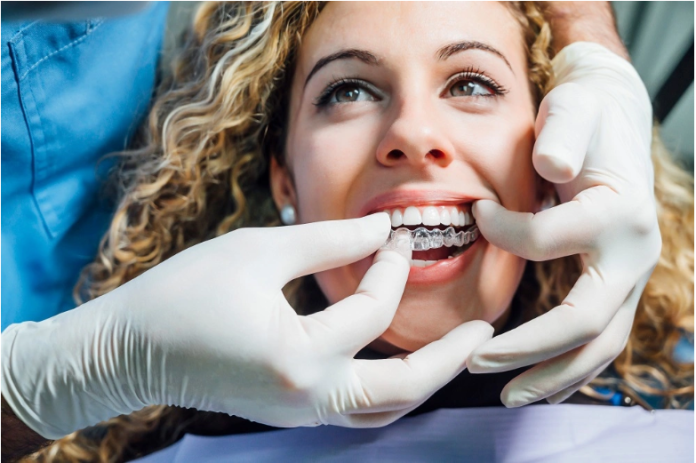

Some alignment concerns sit somewhere between a very small cosmetic adjustment and a complex orthodontic case. The teeth may look reasonably straight overall, yet several areas of crowding, spacing or rotation may still need attention. In these situations, a very short aligner programme may not provide enough scope for the movements required. Invisalign Lite is designed for selected mild to moderate cases where a little more flexibility is needed, without automatically moving towards a comprehensive orthodontic plan.
When a Small Problem Is Not Quite So Small
A slightly uneven smile can sometimes involve more than the tooth that initially catches the eye. One overlapping front tooth, for example, may be related to limited space across several neighbouring teeth. A visible gap may also require movement in more than one area to create a balanced result.
This is where the distinction between a very limited aligner plan and Invisalign Lite becomes important. Lite provides scope for cases where the correction is still relatively moderate but involves more movement than a short-course option is designed to manage.
The decision is therefore not based purely on how noticeable the problem appears. What matters is what needs to happen beneath the visible smile to bring the teeth into more suitable positions.
Several Small Movements Can Add Up
Orthodontic complexity does not always come from one severely misaligned tooth. Sometimes it comes from several smaller issues appearing together.
A patient might have slight crowding at the front, a rotated tooth further along the arch and a small area of spacing. Individually, each concern may seem minor. Correcting all of them together, however, can require a more involved sequence of tooth movements.
This is one reason a quick treatment is not always enough. Aligners work by moving teeth progressively, and each stage needs to create the right conditions for the next.
Creating Space Can Be Part of the Plan
Crowded teeth may need additional room before they can move into better alignment. The way this space is managed depends on the individual mouth and the amount of correction required.
An Orthodontist Parsons Green can assess how much space is available, which teeth need repositioning and whether the proposed movements are suitable for a Lite treatment plan.
Invisalign Lite Sits Between Limited and Comprehensive Treatment
It can be helpful to view Invisalign treatment in terms of the level of correction required rather than simply how quickly treatment can be completed. Some patients need only minor adjustments, while others require a more comprehensive approach involving several areas of the smile.
Invisalign Lite can be suitable for cases that need more movement than a very limited treatment but do not require the wider scope of comprehensive Invisalign. It may be considered for mild to moderate crowding, spacing or several teeth that need to be repositioned together.
The right option depends on the individual alignment, bite and treatment goals. An Orthodontist can assess these factors and determine whether Lite provides enough scope to achieve the planned result.
When Crowding Extends Beyond One Tooth
Crowding is often most noticeable around the front teeth, but its cause may extend further along the dental arch. If several teeth are competing for limited space, simply straightening the most visible tooth may not address the wider alignment.
A treatment plan may instead need to coordinate the movement of several teeth. One tooth might move to create space while another rotates or shifts into a better position.
This coordinated movement is one of the situations where a slightly broader aligner plan can become relevant. Rather than focusing only on the tooth that looks crooked, the treatment considers how the surrounding teeth contribute to the overall alignment.
Gaps Are Not Always About Closing One Space
Spacing can present a similar challenge. A patient may be concerned about one obvious gap, but simply bringing those two teeth together could leave the spacing uneven elsewhere.
The treatment may therefore need to redistribute space so that the final result looks more balanced. Tooth proportions and the position of neighbouring teeth can also influence what is achievable.
With Invisalign Lite, the aim can be to address these connected movements rather than treating one visible space in isolation. This helps explain why seemingly modest spacing can sometimes require more planning than expected.
What If More Than the Front Teeth Need Attention?
Many patients first consider aligners because they are unhappy with their front teeth. Yet orthodontic planning cannot always stop at the visible smile.
The teeth further back help influence the available space and the way the bite comes together. If moving the front teeth affects their relationship with the rest of the arch, those areas may also need to be considered.
This does not necessarily mean that a patient needs extensive orthodontic treatment. It simply means that the treatment plan has to account for all the teeth involved in achieving the intended correction.
The Bite Remains Part of the Assessment
A straighter appearance is important for many patients, but the upper and lower teeth also need to work together appropriately.
Before recommending Invisalign Lite, the dental professional can assess whether the planned alignment changes are compatible with the existing bite. If a more significant bite correction is required, a different Invisalign plan may be considered.
More Aligners Can Allow for More Detailed Correction
The value of a Lite treatment is not simply that it contains more aligners than a very short treatment. The additional treatment scope allows a greater sequence of movements to be planned. For example, one stage may gradually create room before another tooth moves further into alignment. Other movements may occur together where clinically appropriate.
This staged approach is useful when several small changes depend on one another. It allows treatment to progress towards the planned alignment rather than attempting to make every correction at once. Patients still need to wear their aligners as instructed. Consistent wear plays an important part in helping the teeth follow the planned sequence.
When Is a Broader Invisalign Plan Needed Instead?
Lite treatment has its limits. If the assessment identifies more substantial crowding, significant bite concerns or tooth movements that require greater flexibility, a comprehensive Invisalign plan may be more appropriate.
This is why selecting treatment based only on the expected duration can be misleading. A shorter plan may sound attractive, but it needs to provide enough scope for the required correction.
An orthodontist Parsons Green can consider the number of teeth involved, the amount of movement required, the bite and the overall treatment objective. The recommendation can then reflect the complexity of the case rather than simply how quickly the patient hopes to finish treatment.
Conclusion
Orthodontic care does not need to be divided into simply “quick” and “complex”. Many patients fall somewhere between these two ends of the spectrum.
Someone with several mild alignment concerns may need more flexibility than a very short treatment offers while still not requiring a comprehensive plan. This is where Invisalign Lite can provide a useful middle ground for appropriately selected cases.
At Perfect Smile, an Orthodontist Parsons Green can assess how the teeth relate to one another and determine the level of correction required. When minor alignment needs more than a quick fix, the aim is to select a treatment with enough scope to make the necessary movements without making the orthodontic plan more extensive than the individual smile requires.