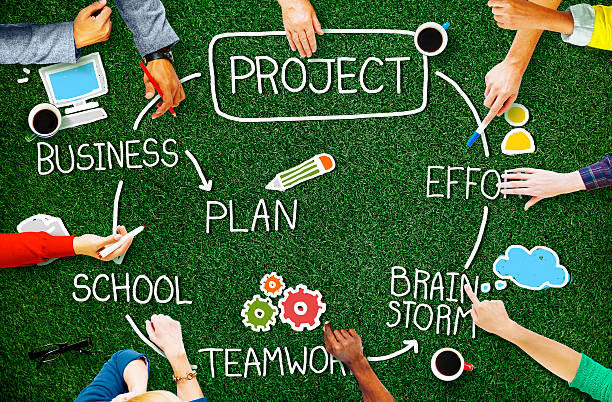
 transforms classrooms by making learning active and hands-on. Instead of memorizing facts, students solve)
Project‑based learning (PBL) transforms classrooms by making learning active and hands-on. Instead of memorizing facts, students solve real problems. This approach blends academic knowledge with practical skills, preparing learners for life beyond school.
How Project‑Based Learning Works
In PBL, teachers present real challenges or questions.
Students collaborate in teams to research, experiment, and develop solutions.
Additionally, they present their findings to classmates, teachers, or community members.
This process encourages students to think critically and take ownership of their learning. Moreover, it helps learners develop leadership, teamwork, and communication skills simultaneously.
Benefits of Project‑Based Learning
PBL enhances critical thinking, problem-solving, and collaboration.
Students learn to ask thoughtful questions rather than simply memorize answers.
Furthermore, they gain confidence through hands-on creation instead of passive listening.
By connecting lessons to tangible projects, students understand the relevance of their learning. Consequently, they retain knowledge longer and apply it in real-life scenarios.
Examples of PBL in Schools
In science, students might design eco-friendly gardens or renewable energy experiments.
In language arts, learners could write, publish, and present digital magazines.
In math, they may analyze traffic data or optimize local transportation plans.
As a result, students experience how academic concepts work in the real world. They develop skills essential for problem-solving, creativity, and innovation.
Technology also supports PBL, offering tools for collaboration, research, and virtual presentations. Additionally, it allows students to track progress, visualize data, and refine solutions continuously.
Conclusion
Project‑based learning prepares students for the modern world by combining knowledge with action.
It nurtures curious thinkers who approach challenges with creativity, confidence, and resilience.
Ultimately, PBL equips students with essential life skills while making education engaging, relevant, and meaningful. Schools that adopt PBL foster learners ready for the future.